



All About
DEPARTMENT OF ECE
The ECE Department was established in the year 1999 with an
intake of 60 students and this was increased to 120 students in the 2007 and increased to
180 students in the 2012. The department has an eminent faculty and well supported
infrastructure and laboratories. The faculty keeps abreast with the latest advances in
technology and ensures that hardware equipment and related software are upgraded to ensure
its students are able to keep pace with current trends in technology and the
industry.
The department also offers a Post – Graduate course in ‘VLSI Design ’ started
in the year 2011.
The students are encouraged to participate in workshops, industrial internship,
industrial visits and seminars; along with the projects assigned during the course, these
activities enable them to broaden their outlook and build in professionalism that makes
their transition from college to industry smoother after graduation.
Vision
To develop ethically strong and highly skilled Electronics and Communication Engineering professionals capable of meeting global technological challenges.
Mission
To produce highly competent Electronics and Communications engineers to suite global needs
- M1:Provide strong fundamental and practical knowledge in Electronics and Communication Engineering for developing skilled professionals
- M2:Enhance technical competence through quality education, industry exposure, and hands-on training in emerging technologies.
- M3:Build self-confidence, problem-solving ability, and adaptability to face global technological challenges.
- M4:Instil professional ethics, human values, and a commitment to lifelong learning.
Knowledge and Attitude Profile(WKs):
To produce highly competent Electronics and Communications engineers to suite global needs
- WK1:A systematic, theory-based understanding of the natural sciences applicable to the discipline and awareness of relevant social sciences.
- WK2:Conceptually-based mathematics, numerical analysis, data analysis, statistics, and formal aspects of computer and information science to support detailed analysis and modelling applicable to the discipline.
- WK3:A systematic, theory-based formulation of engineering fundamentals required in the engineering discipline.
- WK4:Engineering specialist knowledge that provides theoretical frameworks and bodies of knowledge for the accepted practice areas in the engineering discipline; much of this knowledge is at the forefront of the discipline.
- WK5:Knowledge, including efficient resource use, environmental impacts, whole-life cost, reuse of resources, net-zero carbon, and similar concepts, that supports engineering design and operations in a practice area.
- WK6:Knowledge of engineering practice (technology) in the practice areas of the engineering discipline.
- WK7:Knowledge of the role of engineering in society and identified issues in engineering practice, such as professional responsibility to public safety and sustainable development.
- WK8:Engagement with selected knowledge in the current research literature of the discipline, with awareness of the power of critical thinking and creative approaches to evaluate emerging issues.
- WK9:Knowledge of professional ethics, responsibilities, and norms of engineering practice. Awareness of the need for diversity with respect to ethnicity, gender, age, physical ability, etc., along with mutual understanding, respect, and inclusive attitudes.
DEPARTMENT OF HOD
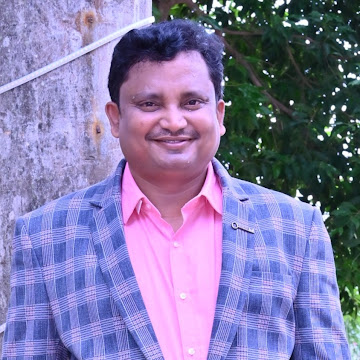
- Dr.Ennam Govinda
- Professor&HOD
- Department of ECE
- Avanthi Institute of Engineering and Technology
- Makavarapalem,Anakapalli-531113
Dr Ennam Govinda, working as an Professor &HOD in the Department of Electronics and Communication Engineering at Avanthi Institute of Engineering and Technology, Tamaram, Anakapalli (District)-531113, Andhra Pradesh, India. He completed his B.Tech from V.R Siddharadha Engineering College, Vijayawada and M. Tech( DSCE) from JNTUH ,Hyderabad and Ph.D from GITAM University, Visakhapatnam. He has more than 20 years of Teaching experience in the field of Electronics and Communication Engineering. He published 20+ Research papers in various reputed (UGC approved, Scopus/ SCI / Web of Science) International and National Journals, magazines, and conferences. He attended 16 workshops and he is a member of different professional bodies like IEEE, MIE, IETE etc. He Guided 3 PG and more than 50 UG academic projects. His area of research is in Image Processing, Antennas, Machine Learning etc.
Department of ECE
PEO's
- PEO 1: Graduates will apply strong fundamentals of Electronics and Communication Engineering to analyse, design, and implement effective solutions for real-world engineering problems.
- PEO 2: Graduates will demonstrate technical competence, innovation, and adaptability by effectively utilizing contemporary engineering tools and technologies to pursue careers in industry, higher education, research, or entrepreneurship.
- PEO 3: Graduates will exhibit professional ethics, human values, teamwork, leadership and effective communication while contributing responsibly to society.
- PEO 4: Graduates will engage in lifelong learning, continuous self-improvement, and upskilling to keep pace with emerging technologies and global challenges.
PO'S
- 1.ENGINEERING KNOWLEDGE:Apply knowledge of mathematics, natural science, computing, engineering fundamentals and an engineering specialization as specified in WK1 to WK4 respectively to develop to the solution of complex engineering problems.
- 2.PROBLEM ANALYSIS: Identify, formulate, review research literature and analyze complex engineering problems reaching substantiated conclusions with consideration for sustainable development. (WK1 to WK4)
- 3.DESIGN/DEVELOPMENT OF SOLUTIONS: Design creative solutions for complex engineering problems and design/develop systems/components/processes to meet identified needs with consideration for the public health and safety, whole-life cost, net zero carbon, culture, society and environment as required. (WK5)
- 4.CONDUCT INVESTIGATIONS OF COMPLEX PROBLEMS: Conduct investigations of complex engineering problems using research-based knowledge including design of experiments, modelling, analysis & interpretation of data to provide valid conclusions. (WK8).
- 5.ENGINEERING TOOL USAGE: Engineering Tool Usage: Create, select and apply appropriate techniques, resources and modern engineering & IT tools, including prediction and modelling recognizing their limitations to solve complex engineering problems. (WK2 and WK6)
- 6.THE ENGINEER AND THE WORLD: Analyze and evaluate societal and environmental aspects while solving complex engineering problems for its impact on sustainability with reference to economy, health, safety, legal framework, culture and environment. (WK1, WK5, and WK7).
- 7.ETHICS: Apply ethical principles and commit to professional ethics and responsibilities andnorms of the engineering practice.
- 8.INDIVIDUAL AND TEAM WORK: Function effectively as an individual, and as a member or leaderin diverse teams, and in multidisciplinary settings.
- 9. COMMUNICATION: Communicate effectively and inclusively within the engineering community and society at large, such as being able to comprehend and write effective reports and design documentation, make effective presentations considering cultural, language, and learning differences
- 10.PROJECT MANAGEMENT AND FINANCE: Apply knowledge and understanding of engineering management principles and economic decision-making and apply these to one’s own work, as a member and leader in a team, and to manage projects and in multidisciplinary environments.
- 11.LIFE-LONG LEARNING: Recognize the need for, and have the preparation and ability for i) independent and life-long learning ii) adaptability to new and emerging technologies and iii) critical thinking in the broadest context of technological change. (WK8)
PSO's
- PSO 1: Apply knowledge of Electronics and Communication engineering to design, analyze and implement Electronics, communication systems, and signal processing applications.
- PSO 2:Develop and integrate hardware– software solutions using embedded systems, VLSI concepts, communication technologies and emerging domains such as IoT, AI assisted systems and next-generation wireless technologies.
| Faculty Profile for academic year 2023-24 | ||||
| S.No. | Name | Gender | Designation | DOJ |
| 1 | Dr. ENNAM GOVINDA | Male | PROFESSOR | 8/1/2003 |
| 2 | Dr. RAYAVARAPU RAO PRASADRAO | Male | PROFESSOR | 9/3/2003 |
| 3 | Dr. RAVIKUMAR KOLAKALURI | Male | PROFESSOR | 9/15/2023 |
| 4 | Mr. DEEPAK ADIRAJU VARAHA SANTHOSH | Male | ASSOCIATE PROFESSOR | 10/10/2022 |
| 5 | Miss SUJATHA JAKKALA | Female | ASSOCIATE PROFESSOR | 8/22/2023 |
| 6 | Mrs. POLAMARASETTY LALITHA | Female | ASSOCIATE PROFESSOR | 9/10/2023 |
| 7 | Ms. VUDIMUDI BHARATHI ROJA | Female | ASSOCIATE PROFESSOR | 12/8/2023 |
| 8 | Mr. PARISAM SAIBABU | Male | ASST PROFESSOR | 8/15/2023 |
| 9 | Mr. SISTU PHANI VARA PRASAD VARA PRASAD SISTU PHANI VARA PRASAD | Male | ASST PROFESSOR | 5/13/2017 |
| 10 | Ms. BHARATHI LEELA NADISETTI | Female | ASST PROFESSOR | 8/21/2023 |
| 11 | Ms. JAKKA VANDANA | Female | ASST PROFESSOR | 8/15/2023 |
| 12 | Ms. KANDRAKOTA SANDHYA | Female | ASST PROFESSOR | 8/15/2023 |
| 13 | Ms. KALPANA PADATHALA | Female | ASST PROFESSOR | 1/2/2024 |
| 14 | Mr. KINTHADA UMA SHANKAR | Male | ASST PROFESSOR | 8/12/2013 |
| 15 | Mr. DOGGA SREENIVASA | Male | ASST PROFESSOR | 7/15/2015 |
| 16 | Mr. PANDIPATI KUMAR PRASANTKUMAR | Male | ASST PROFESSOR | 10/7/2015 |
| 17 | Ms. BELLAPUKONDA TEJA AJITHA | Female | ASST PROFESSOR | 8/8/2015 |
| 18 | Ms. DOKKARA ANUSHA | Female | ASST PROFESSOR | 12/13/2016 |
| 19 | Mr. KAGUPATI SIVA GANESH VENKATA | Male | ASST PROFESSOR | 10/3/2017 |
| 20 | Mr. ADIGARLA RAMANABABU | Male | ASST PROFESSOR | 8/9/2017 |
| 21 | Ms. THOTA SOWJANYA | Female | ASST PROFESSOR | 12/13/2016 |
| 22 | Ms. DEVARAPALLI PAVANA KUMARI | Female | ASST PROFESSOR | 11/28/2017 |
| 23 | Miss BODHIREDDY SANDHYA | Female | ASST PROFESSOR | 6/20/2018 |
| 24 | Mr. GUDALA BABU PRADEEP | Male | ASST PROFESSOR | 4/4/2019 |
| 25 | Mr. CHENNA PRATAP | Male | ASST PROFESSOR | 11/4/2019 |
| 26 | Ms. SIREESHA RONGALI | Female | ASST PROFESSOR | 11/4/2019 |
| 27 | Ms. GORLI UMA DEVI | Female | ASST PROFESSOR | 12/5/2019 |
| 28 | Mr. BONDA KUMAR RAMESH | Male | ASST PROFESSOR | 3/6/2023 |
| 29 | Ms. POLAKI KUMARI RAGHAVA | Female | ASST PROFESSOR | 8/1/2011 |
| 30 | Mr. ANAND VENKATA SANKABATHULA | Male | ASST PROFESSOR | 9/21/2020 |
| 31 | Mr. TAMRAM NAIDU PATNALANAIDU | Male | ASST PROFESSOR | 6/1/2012 |
| 32 | Mr. MAKKAPATI SARAT RANGANATH SARATH | Male | ASST PROFESSOR | 6/1/2012 |
| 33 | Ms. BONDLA MAHA LAKSHMI | Female | ASST PROFESSOR | 12/8/2023 |
| 34 | Ms. SETTI SIRISHA | Female | LECTURER | 9/7/2022 |
| 35 | Ms. BHIMIREDDY PARVATHI LAKSHMI | Female | LECTURER | 9/7/2022 |
| 36 | Mr. VENKATAMANIKANTASAI MUPPANDAM | Male | LECTURER | 6/23/2023 |
| 37 | Miss EARLA HARIKA SAI MANIKANTHA GOWRI | Female | LECTURER | 6/23/2023 |
| 38 | Mr. ALLA RAJESH VENKATA | Male | LECTURER | 8/25/2023 |